Thursday 16 April 2026

Thursday 16 April 2026

Hard Work and Sports Infrastructures Development, National Teams’ Success Secret – Mohammed VI Football Complex Director

Rabat – Hard work and the development of sports infrastructure are factors that have contributed to the success of Morocco’s teams at various international events, according to the director of the Mohammed VI Football Complex, Hassan Kharbouch.

The resources made available to the various men’s and women’s national teams, across all age categories, have contributed to achievements that have propelled football to the forefront of the world stage, Kharbouch told MAP.

Thanks to hard work and the development of infrastructure, which is in line with the Royal High Guidelines, the Moroccan national team came fourth in the World Cup in Qatar. The national futsal team amply deserved its eighth place in the world, and the youth and women’s teams shone in various events, he added.

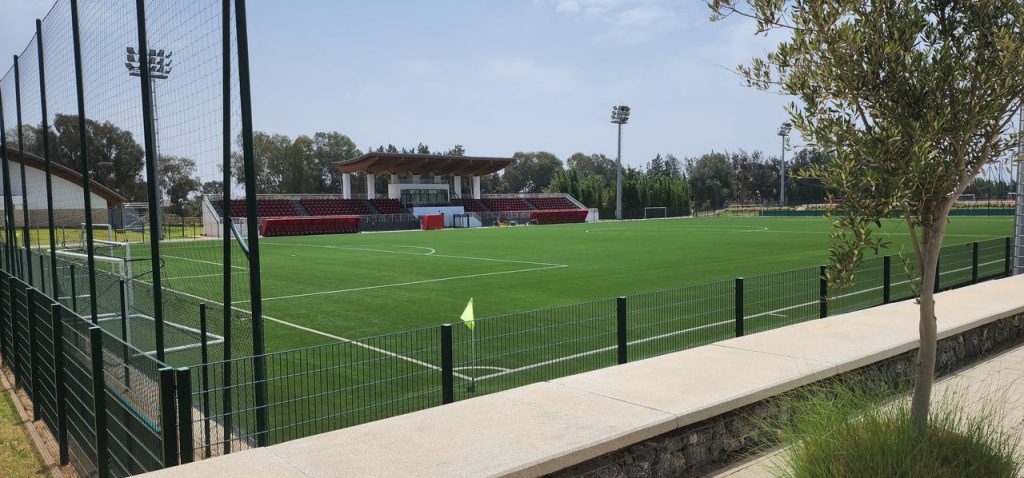
Kharbouch also emphasized the importance of the Mohammed VI Football Complex, inaugurated by HM King Mohammed VI in 2019, which marked a turning point in the development of Moroccan football and formed the basis of several performances in continental and international competitions. The Complex is a pioneering sports monument offering its services to national teams and hosting training courses.

The Royal Moroccan Football Federation, upon High Royal Instructions, has drawn up an ambitious action plan and a roadmap for taking care of the men’s and women’s national teams in all categories, said the official, adding that some 26 teams are currently training at the Complex.

He also pointed out that there is constant and regular collaboration with FIFA and CAF for the organization of workshops in all specialties. The contractual relationship between Morocco and FIFA for the holding of workshops in this Complex, which meets international standards and ensures the conditions for success, is “a source of pride,” he said.

In this connection, Kharbouch emphasized that the FRMF has a number of partnerships with African countries, involving training exchanges and preparatory matches for all age categories. Saying that these partnerships are inspired by HM the King’s wise policy of opening up to African countries and promoting South-South relations.

With regard to the basic work of sports training, the director of the Complex highlighted the action undertaken at the level of the 13 regional academies. These academies work according to ambitious programs for the prospecting and training of talent to produce future champions for the national selections.

He also pointed out that the Mohammed VI Football Complex currently hosts 155 U17 and U15 girls who study in the mornings and play football in the afternoons. Enabling them to benefit from medical and educational care, as well as using the Complex’s facilities for training.

The manager also highlighted the importance of the referees’ academy, the first of its kind in Africa, which offers its services to female university or baccalaureate students. These students benefit from refereeing training outside their study period.
MAP

Related news

The Spanish league’s international reach is firmly anchored in Morocco, LaLiga President Javier Tebas emphasized in an exclusive interview with MAP, highlighting the historical, cultural, and sporting ties between the two countries.

According to Tebas, the Middle East and North Africa region is a strategic market for LaLiga, thanks to the enthusiasm of passionate fans. In this context, Morocco holds a special place, as it is linked through “a unique historical relationship, and I think that is also reflected in football,” he stated.

In this regard, the LaLiga president highlighted deep relations between the two countries in the sporting arena. “There have always been many ties, as well as a spirit of unity and mutual understanding between Spain and Morocco in the field of sports in general and football in particular,” he explained.

For LaLiga, the enthusiasm of Moroccan fans for Spanish football give s a decisive edge over other leagues such as the Premier League. Tebas believes that in terms of viewership in this region, LaLiga could even surpass its main English rival.

This advantage is driven by the two countries’ geographical proximity, intertwined history, and the recent meteoric rise of Moroccan football, which Tebas deems “well-deserved and hard-earned achievements.”

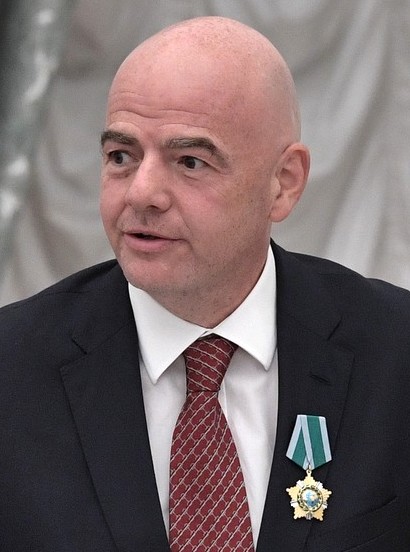
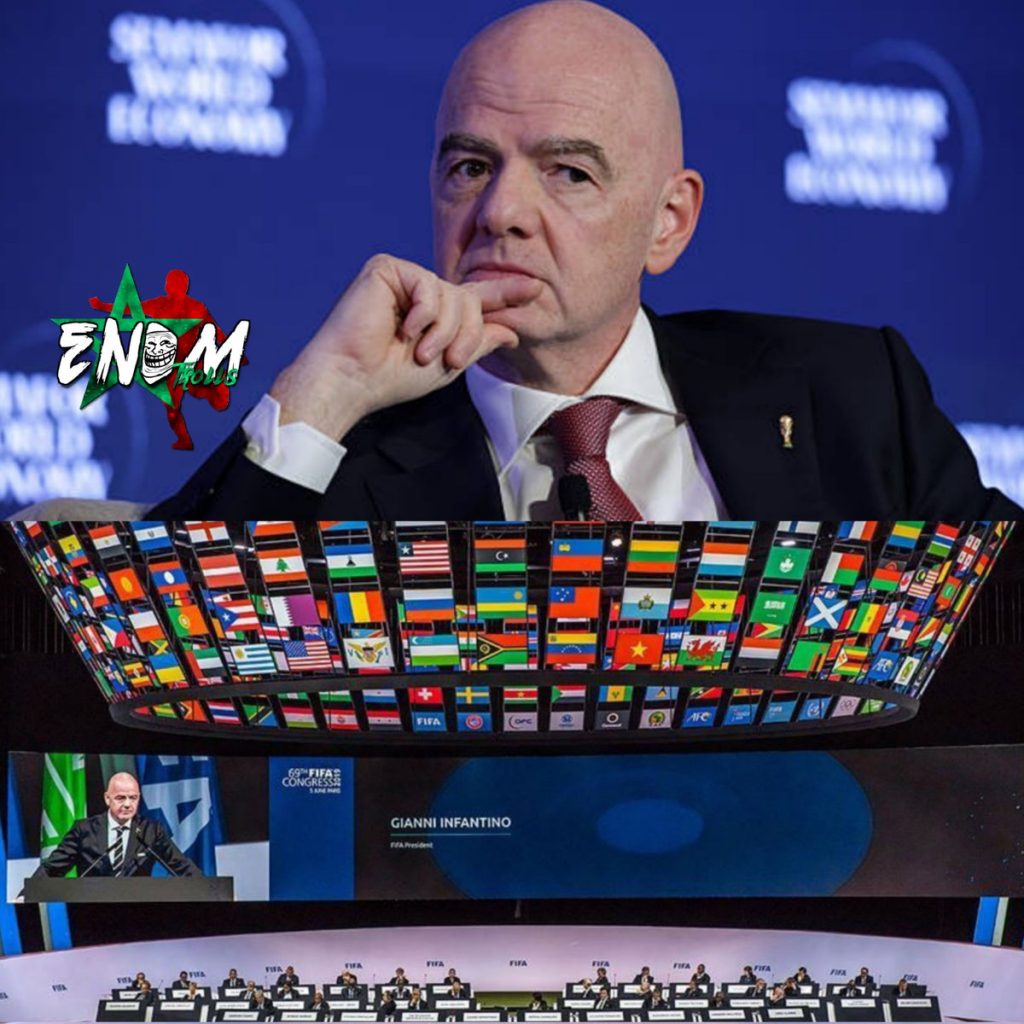
World football is undergoing a quiet revolution under the era of Gianni Infantino, President of FIFA, said Fouzi Lekjaa, President of the Royal Moroccan Football Federation (FRMF).

“Overall, we are witnessing a quiet revolution in world football, a metamorphosis of FIFA,” Lekjaa stated in a video message broadcast on the Moroccan national team’s social media accounts on the occasion of the ten years Infantino has spent at the helm of the international football governing body.

“Speaking about Gianni Infantino’s record (elected on February 26, 2016) at the head of FIFA, I think it is clear to recall that what he has achieved is enormous. It is a complete transformation of FIFA,” Lekjaa emphasized.

“I would cite the total revision of FIFA’s governance, particularly regarding the clean-up of its finances, which has multiplied FIFA’s revenues and resources and subsequently made it possible to double and triple development efforts across all continents,” noted the FRMF president.

In the same vein, Lekjaa referred to “the revision and reforms related to competitions, starting with the men’s World Cup by increasing the number of teams, and extending to all competitions across all age categories, encompassing both men’s and women’s football.”

“Like all African and global federations, we have all benefited from the resources allocated to development, which has accelerated football development programs, whether in terms of infrastructure or technical supervision,” the FRMF head noted.

The Royal Moroccan Football Federation (FRMF) denied Thursday reports circulated by certain media outlets on the appointment of a new head coach for the Atlas Lions.

In a press release, the FRMF said it “will inform the public opinion -as it has always done – of any updates regarding the national team in due course.”

The Royal Moroccan Football Federation (FRMF) has decided to lodge an appeal against the rulings issued by the Disciplinary Board of the Confederation of African Football (CAF) following the incidents at the 2025 African Cup of Nations finals between Morocco and Senegal.

 TIn a press release published on Tuesday, the FRMF stated that it had “taken note of the CAF Disciplinary Board decisions recently communicated to the Federation, concerning the events that marred the Senegal-Morocco match played on January 18, 2026, as part of the 35th AFCON finals, which were marked by the withdrawal of Senegalese players and staff members from the field of play, the pitch invasion by Senegalese supporters and the violent clashes that ensued.”

“Given that the sanctions imposed are not commensurate with the scale and gravity of the incidents, as outlined in the official letter sent by FRMF President to the CAF President -while reserving all rights provided for under the regulations-the FRMF has decided to appeal the decisions taken by the CAF Disciplinary Board,” the press release adds.

French Ambassador to Morocco Christophe Lecourtier and Director General of the Maghreb Arab Press Agency (MAP) Fouad Arif visited the joint newsroom set up by MAP and Agence France-Presse (AFP) to cover the African Cup of Nations (AFCON-Morocco 2025), which is taking place in the Kingdom until January 18.

On this occasion, the French diplomat and MAP Director General followed explanations on the functioning of this editorial office, which is located within the Maghreb Arab Press Agency, and discussed with its managers the various aspects of covering this continental competition.

In a statement to MAP, Lecourtier welcomed the establishment of this newsroom designed to cover an extremely intense and major sporting event on which “the eyes of Africa and sports enthusiasts will be set during the upcoming weeks.”

“I am very delighted to see a team of French journalists come here to work with their Moroccan colleagues so as to highlight this major event in the most modern way possible,” he said.

According to the French ambassador, this project is the continuation of a long-standing cooperation covering a wide range of areas between the two news agencies.

For his part, Arif told MAP that the joint newsroom, which involves Moroccan and French journalists and mentors, forms part of the 2nd phase of the training program launched more than a month ago, with teams from MAP’s sports division, photographers and social media content creators participating in a training workshop in Paris.

This is one aspect of bilateral cooperation that is poised to grow and expand soon along with other areas of agency journalism, he stressed. “We are all optimistic about the outcomes and the interest both parties place on this cooperation.”

MAP and AFP signed last October in Paris a cooperation agreement to establish partnership in sports journalism.

The said agreement, signed by MAP Director General Fouad Arif and AFP CEO Fabrice Fries aims at promoting the exchange of expertise, editorial and technological innovation, and conducting common projects.

Thanks to the vision of His Majesty King Mohammed VI, Morocco has become a global football powerhouse, said Victor Montagliani, President of the Confederation of North, Central American and Caribbean Association Football (CONCACAF) and Vice President of FIFA.

“Morocco has an incredible history. The vision of His Majesty King Mohammed VI and the work carried out by the Royal Moroccan Football Federation have positioned the Kingdom among the great footballing nations,” Montagliani underlined in an interview with MAP.

In this regard, he praised the strategy for developing Moroccan football, initiated under the leadership of His Majesty the King, and the recent achievements of the national team, citing the milestone achieved by Morocco’s U20 team in the World Cup and the historic achievement of the Atlas Lions in the last World Cup in Qatar (semifinals).

The Mohammed VI Football Academy is at the heart of this success story, noted the CONCACAF President, explaining that this institution plays a major role in promoting football and represents a model to be followed by many countries.

“I think Morocco today is not only the best in Africa, but one of the best in the world. And I’m sure many teams will want to avoid facing Morocco at the 2026 World Cup, because they are a very good team,” he said.

Referring to the preparations underway for the 2026 World Cup, Montagliani assured that the host countries, namely the United States, Canada, and Mexico, are “ready” to host a World Cup that promises to be “the biggest ever organized.”

This unprecedented edition of football’s premier competition is the first to be jointly organized by three countries and the first to feature 48 teams, which will play a total of 104 matches, including 78 in the United States, 13 in Canada, and 13 in Mexico, he noted.

The matches in this global tournament will be played in 16 stadiums: 11 in the United States, three in Mexico, and two in Canada. The opening match is scheduled for June 11 at Azteca Stadium in Mexico City, while the final will take place on July 19 at MetLife Stadium in New York/New Jersey.