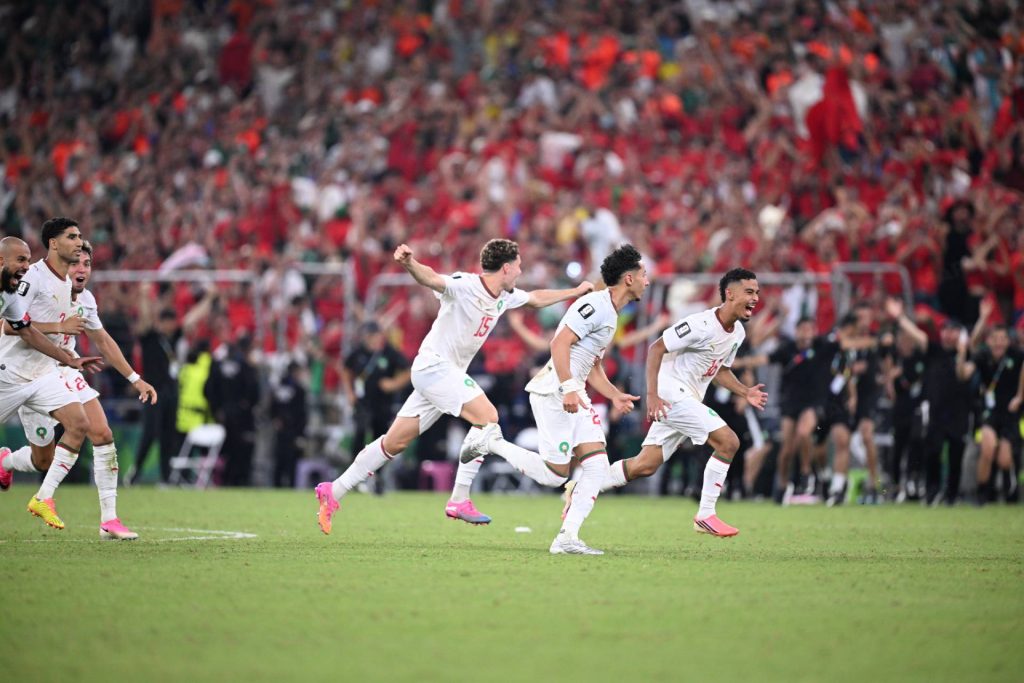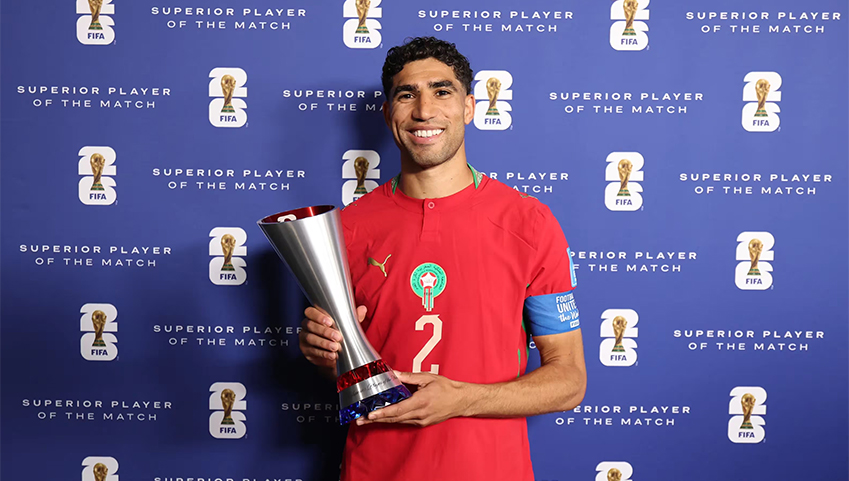


A lightning-fast goal from Ismaël Saibari in the second minute secured a crucial 1-0 victory for Morocco over Scotland on Friday in Boston on Matchday 2 of Group C of the 2026 FIFA World Cup. This valuable victory allows Mohamed Ouahbi’s men to move closer to the knockout stage.
For this second group-stage encounter, head coach Mohamed Ouahbi opted to field the same starting eleven that faced Brazil in the opening match.
Dominating from the very first seconds of the match, the Moroccans struck again. Brahim Diaz delivered an assist to Saibari, who, upon receiving the ball, scored Morocco’s fastest World Cup goal in the tournament with a right-footed strike that found the top corner just two minutes into the game.
Although Scotland attempted to respond, the Atlas Lions maintained their grip on proceedings, circulating the ball confidently and dictating the tempo while looking to exploit spaces in the opposition’s defense. What a start to the match for the Atlas Lions!
Mohamed Ouahbi’s men continued their attacking play and tiki-taka style, repeatedly penetrating the Scottish penalty area and putting the opposing defense under pressure.
Even after conceding the opening goal, the Scots refused to open up offensively. They remained bunched together in their own half, opting for a deep defensive block and waiting for the slightest opportunity to launch a counterattack.
By the first-half cooling break, Steve Clarke’s side had yet to seriously test the Moroccan defense. The statistics highlighted Morocco’s superiority : two clear chances created against none for Scotland, two shots to none, three corners to zero, and only one foul committed by Morocco compared to four by their opponents.
In the 30th minute, Morocco nearly doubled their advantage. Following an excellent move down the right flank, Brahim Diaz combined neatly with Saibari before producing an audacious backheel pass to Neil El Aynaoui. The midfielder’s shot sailed over Gunn’s goal!
A few minutes later, another well-worked combination involving Noussair Mazraoui and Bilal El Khannouss created danger for the Scots, but the final attempt once again failed to find the target.
Scotland’s best opportunity of the opening period came in stoppage time when Andrew Robertson delivered a precise cross into the box, but John McGinn was unable to make decisive contact.
The Scots emerged from the break with greater attacking intent and increased aggression in individual duels, seeking to unsettle the Moroccan side. However, the Atlas Lions quickly reasserted their authority through superior ball retention and technical quality.
As the second half progressed, the tempo gradually slowed. Morocco focused on managing its advantage while remaining alert to opportunities to extend the lead. Scotland, meanwhile, pushed forward in search of an equalizer but struggled to find a way through Morocco’s disciplined and well-organized defense.
In the very final moments of the match, the Scots created several chances, at times putting the Moroccan defense under pressure. The Moroccans had a few close calls, but they ultimately held on, preserving their lead until the final whistle.